
Besides the sun, Cristiano Ronaldo and Port wine, Portugal offers a huge and diverse gastronomy. Meet five traditional recipes with curious, funny names.
Top five traditional Portuguese recipes with a funny name
Garden fishes (Peixinhos da Horta)

The name may fool you, but this dish has no fish at all. Peixinhos da Horta are fried green beans. This beloved recipe is linked to the Portuguese ships that, from the 15th century, set out to sea in one of the most important chapters of Portuguese history, the Age of Discovery. Legend says it kept sailors happy and fed, and that it inspired today’s Japanese tempura! Get the Peixinhos da Horta recipe.

Old rags (Roupa Velha)

Another misleading name: Roupa Velha is actually a codfish dish (being Portuguese, what a surprise!). It is traditionally made on 25 December, as a way to use the Christmas Eve supper leftovers. All over Portugal, Christmas Eve supper is boiled salted codfish with boiled potatoes, collard greens, eggs and carrots. Portuguese households make the most of everything, so to avoid wasting good food, they created this dish by sauteing the leftovers in olive oil and garlic.
Poked in the ground rice (Arroz de Pica no Chão)
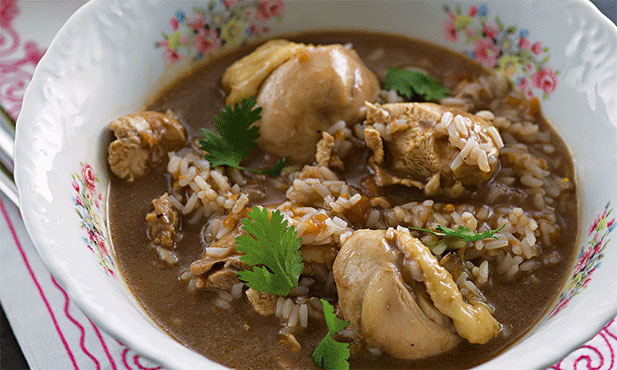
The rice was not pecked from the ground: the name refers to the animal used to make it. Arroz de pica no chão, or arroz de cabidela, comes from Minho, in northern Portugal. Traditionally it is made with free-range chickens of 3 to 4 months, fed on corn, collard greens and other vegetables. A rich chicken rice stew made with the animal’s blood and vinegar, it has a distinct taste that inspired variations in Brazil, Cape Verde and Mozambique.
Monção’s roast kid (Foda de Monção)
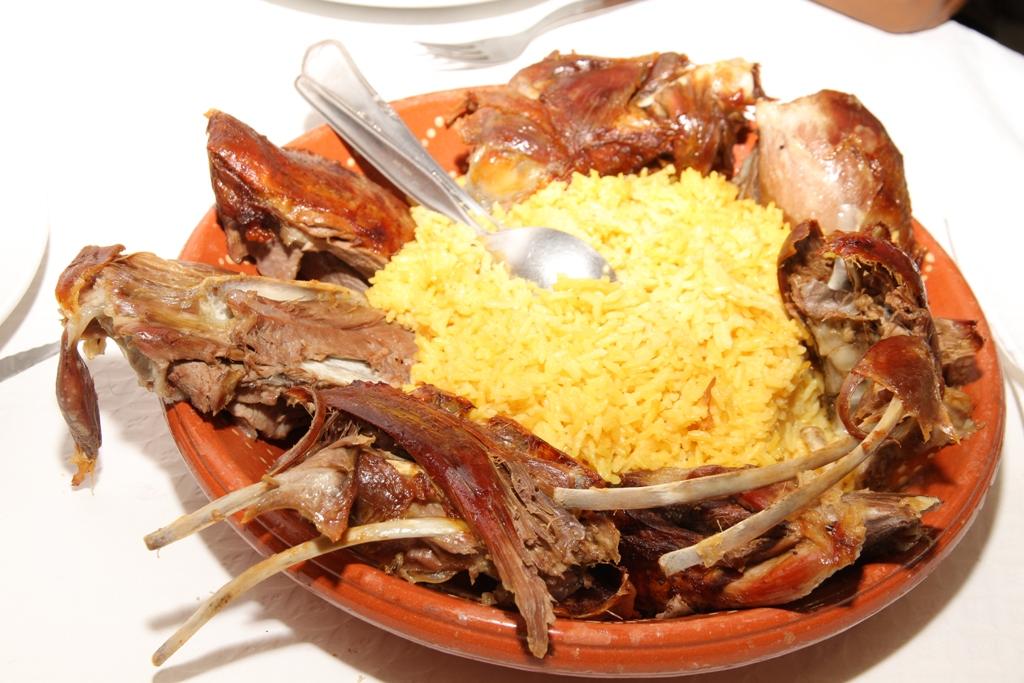
Pardon our French on this one, but this double-meaning name has a curious story. In the Minho region, people from the walled town of Monção who had no cattle used to buy live animals at the town fair. Not every animal was a good buy: some farmers fed salt to the thinner animals so they would drink lots of water and look bigger and fatter. The buyers who took home these water bags soon realized they had been fooled, and swore with the word that gave this roast kid dish its name.
Stone soup (Sopa da Pedra)
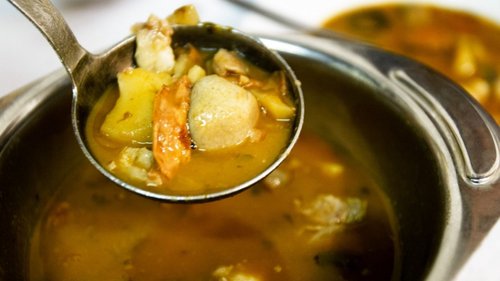
Another traditional dish where history mixes with myth. The story goes that a monk was asking for food door to door, and one farmer refused. Hungry and clever, the monk picked up a stone, cleaned it and said he would make a broth with it. The farmer laughed, but the monk asked to borrow a pan. While the water boiled, he asked for some potatoes, because they would make the stone broth much better. The farmer gave them. Little by little the monk asked for cabbage, carrots and some chouriço, and the farmer always brought them. In the end, the monk served a complete soup, which the farmer ate with pleasure. Only the stone was left at the bottom of the pot. When the farmer asked what he would do with it, the monk replied: I will clean it and save it for another soup!
Never judge a plate by its name!
Book one of our cooking classes in Lisbon and learn much more about traditional Portuguese food and recipes.